
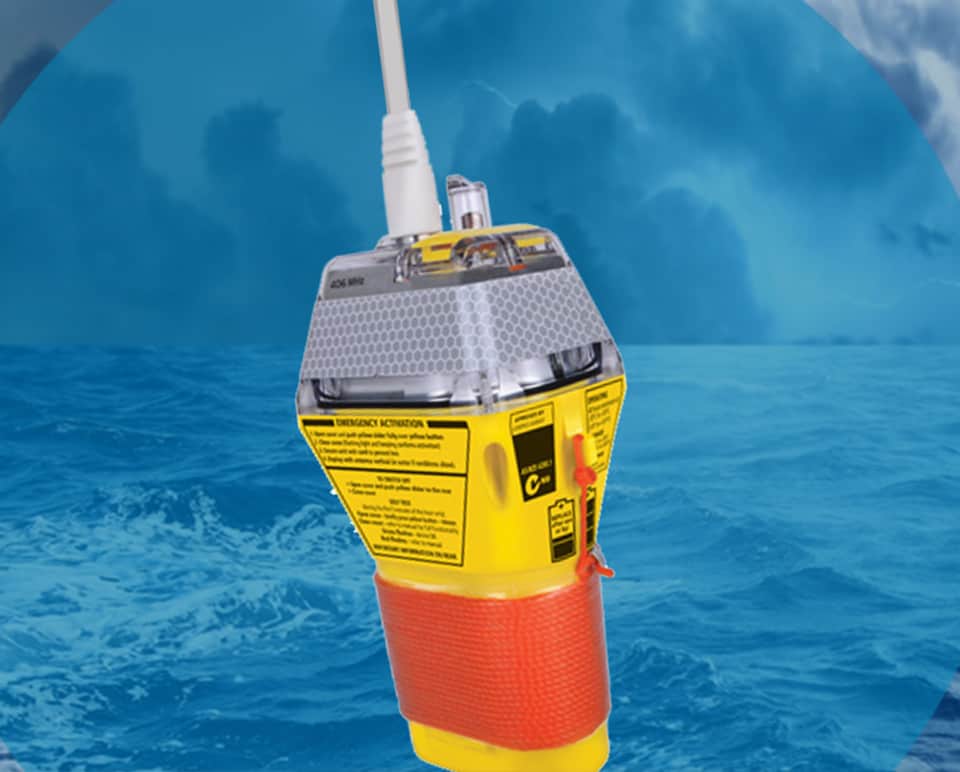
EPIRBs and PLBs
An Emergency Position Indicating Radio Beacon or EPIRB is used to alert search and rescue services in the event of an emergency. It does this by transmitting a coded message on the 406 MHz distress frequency via satellite and earth stations to the nearest rescue co-ordination centre.
Some EPIRBs also have built-in GPS which enables the rescue services to accurately locate you to +/- 50 metres.
Who uses EPIRBs?
EPIRBs are generally installed on boats and can either be operated automatically after an incident or manually. In most countries, they are mandated to be used in all commercial vessels. However, they are also used on yachts and leisure boats.
How does an EPIRB work?

406 MHz EPIRBs work with the Cospas-Sarsat polar orbiting satellite system, giving true global coverage. There is an alert delay of about 45 minutes dependant on when the satellites come into view on the horizon.
The satellite can determine the position of your EPIRB to within 5km (3 miles). The coded message identifies the exact vessel to which the EPIRB is registered. This information allows the rescue services to eliminate false alerts and launch an appropriate rescue.
GPS-enabled EPIRBs have a built-in transmitter which will typically alert the rescue services within 3 minutes and to a positional accuracy of +/- 50 metres (updated every 20 minutes) given a clear view skywards.
Some EPIRBs also have a secondary distress transmitter. This transmits on 121.5 MHz and is used for “homing” purposes. When the rescue services get close, this allows them to direction find on the signal. Some EPIRBs also have a high brightness LED flashing light that aids final visual location.
The differences between EPIRBs and PLBs
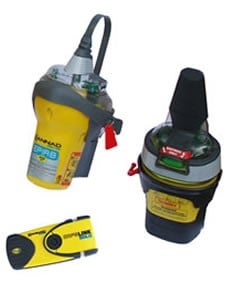
Personal Location Beacons work in exactly the same way as EPIRBs by sending a coded message on the 406 MHz distress frequency which is relayed via the Cospas-Sarsat global satellite system.
However, there are a number of differences between them. PLBs are designed to be carried on the person so they are much smaller, some such as the Fast find are not much larger than the size of a mobile phone. PLBs are designed to be used anywhere in the world, on the sea and also on land. Some don’t float but may come with an additional floatational sleeve which they should be carried in.
PLBs, once activated, will transmit for a minimum of 24 hours; while the battery life on an EPIRB is at least double (a minimum of 48 hours). An EPIRB is registered to a vessel, whereas a PLB is registered to a person. This means that if you are crewing a yacht and you switch to a new yacht the plb is still correctly registered; however, if you have an EPIRB and buy a new yacht you will need to re-register it when installing in your new boat.
Auto or Manual EPIRB?

An EPIRB can be activated either manually or automatically when the EPIRB comes into contact with water.
Manual activation brackets will cover the water sensors, preventing them from activating the EPIRB if, for example, a wave breaks over the boat, and keeping it in a handy location should you need to access it quickly.
Auto Float-free housings, automatically deploy the EPIRB when submerged to a depth lower than 2 – 4 metres in the sea. They work by means of a Hydrostatic Release Unit which cuts the EPIRB free from its housing, causing it to activate. The EPIRB can also be removed from the auto housing to be activated manually.
How many people have been rescued?
With the assistance of COSPAS-SARSAT rescue data. Since the Copsas-Sarsat organisation was set up over 20,000 people have been rescued.
How do I register my EPIRB?
Once you have purchased your EPIRB you need to register it in your country. You need to provide contact information plus information about the vessel it is to be used on. This is vitally important because if the EPIRB is activated the search authorities in your country will try to make contact with you or other people you have listed to enable them to see if a rescue is required. In Australia register your EPIRB on the AMSA website.
